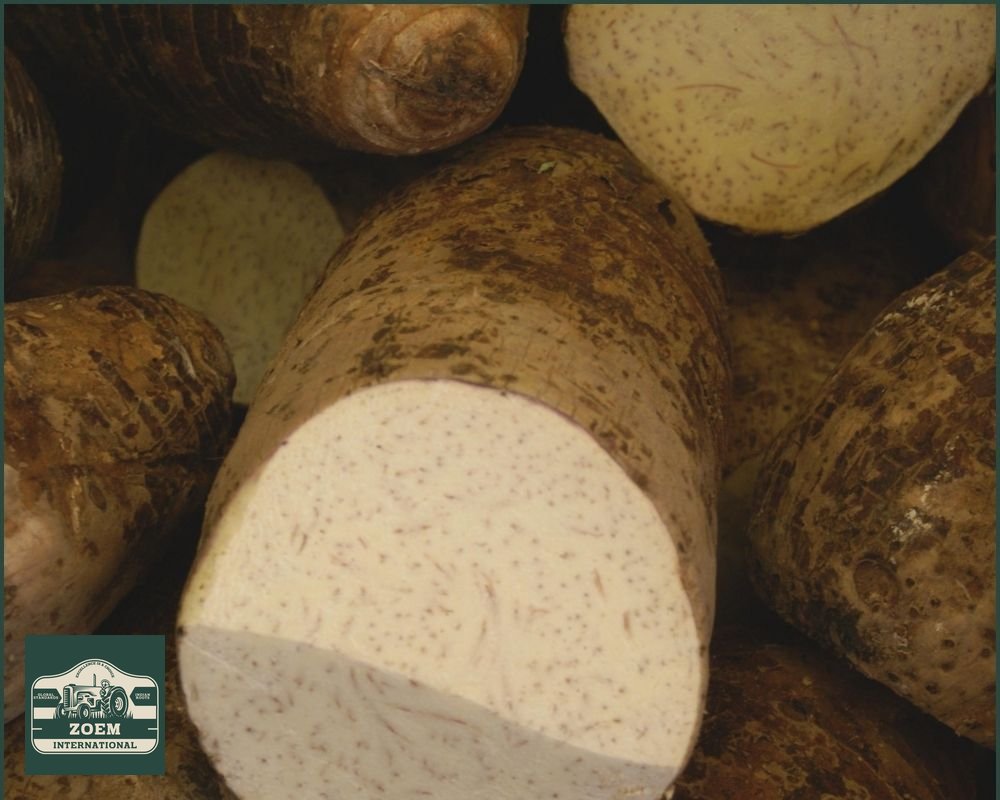
Why Indian yam for export
India is one of Asia's largest yam producers. Two distinct species drive export demand: Elephant Foot Yam (Amorphophallus paeoniifolius, known locally as Suran or Senai) — primarily from Kerala, Tamil Nadu and West Bengal — and Greater Yam (Dioscorea alata) — grown across the same belts. The country produces nearly 1 million tonnes of yam annually, with steady export demand from the GCC, Southeast Asia and the South Asian diaspora retail in the UK, Canada and Australia.
Yam tubers are calibrated for export by weight: small (1–2 kg, retail-ready), medium (2–4 kg, foodservice), and large (4–7 kg, processor / bulk). Quality criteria are absence of cuts, no sprouting, no soft spots, and clean unbroken skin. Sourced from grower cooperatives that follow standard agronomic practices for yam cultivation — adequate spacing, mulching, and timely harvest before the dry season ends.
ZoeM sources primarily from Thrissur and Palakkad (Kerala) and Salem (Tamil Nadu). Packhouses do post-harvest curing (brief sun-drying to harden the skin), grading by weight, and packing in jute or HDPE mesh bags. Yam ships in ambient ventilated containers — no refrigeration needed — making it cost-efficient on longer trade lanes.