Fresh Vegetable

Indian Yam

Elephant Foot Yam (Suran) and Greater Yam from India's leading growing belts. Fresh Indian yam — Elephant Foot Yam (Suran) and Greater Yam. Hand-graded by tuber size (small / medium / large), packed in jute or mesh bags. 40' container loading from Chennai, Cochin and Kolkata.

Elephant Foot Yam · Greater YamOct–MarHS 07143000
Download Spec Sheet ↓
Indian Yam
The category

Why Indian yam for export

India is one of Asia's largest yam producers. Two distinct species drive export demand: Elephant Foot Yam (Amorphophallus paeoniifolius, known locally as Suran or Senai) — primarily from Kerala, Tamil Nadu and West Bengal — and Greater Yam (Dioscorea alata) — grown across the same belts. The country produces nearly 1 million tonnes of yam annually, with steady export demand from the GCC, Southeast Asia and the South Asian diaspora retail in the UK, Canada and Australia.

Yam tubers are calibrated for export by weight: small (1–2 kg, retail-ready), medium (2–4 kg, foodservice), and large (4–7 kg, processor / bulk). Quality criteria are absence of cuts, no sprouting, no soft spots, and clean unbroken skin. Sourced from grower cooperatives that follow standard agronomic practices for yam cultivation — adequate spacing, mulching, and timely harvest before the dry season ends.

ZoeM sources primarily from Thrissur and Palakkad (Kerala) and Salem (Tamil Nadu). Packhouses do post-harvest curing (brief sun-drying to harden the skin), grading by weight, and packing in jute or HDPE mesh bags. Yam ships in ambient ventilated containers — no refrigeration needed — making it cost-efficient on longer trade lanes.

Variety guide

Compare varieties & grades

We supply the variety and grade most appropriate to your target market and end use. Below is a side-by-side comparison.

Primary export

Elephant Foot Yam (Suran)

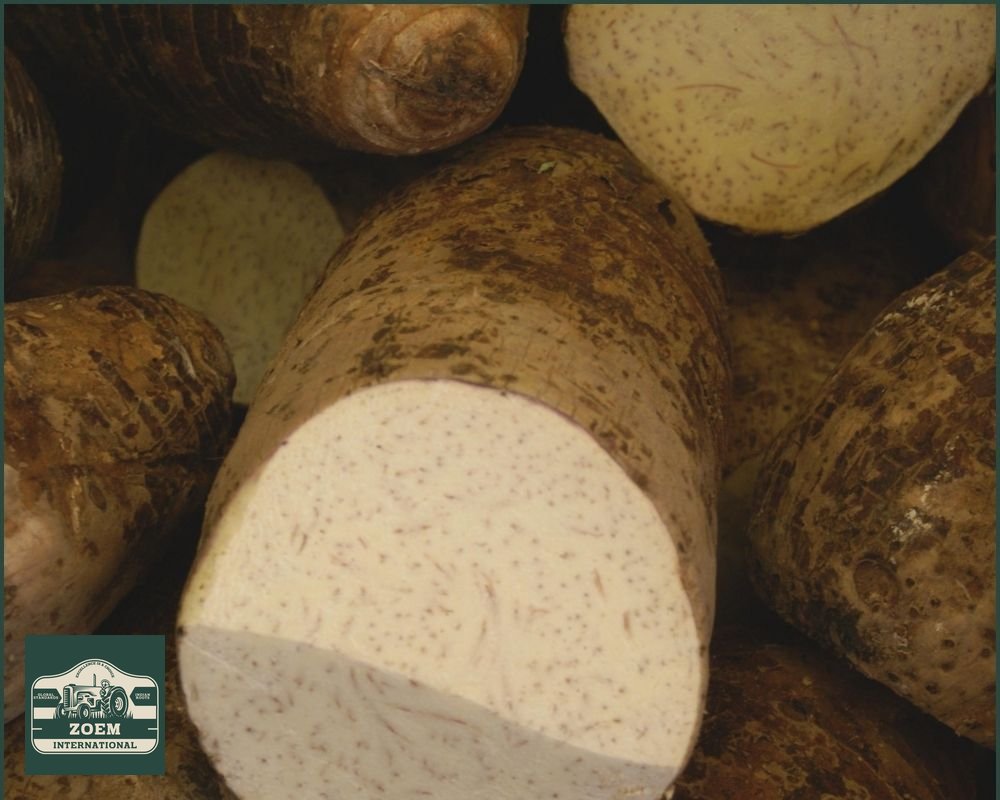
The flagship Indian yam variety — large round flattish tubers, mild flavour, used in traditional South Asian and West African cuisine.

  • Botanical name Amorphophallus paeoniifolius
  • Tuber weight Small 1–2 kg · Medium 2–4 kg · Large 4–7 kg
  • Skin Brown, hardened post-cure
  • Flesh Cream to pale yellow, firm
  • Shelf life 60–90 days ambient ventilated storage
  • Top markets UAE, Saudi Arabia, UK, USA, Canada, Singapore, Malaysia
Specialty supply

Greater Yam

Cylindrical to oblong tubers, white or purple-tinged flesh. Smaller export volume than Elephant Foot but consistent demand from South Asian and Caribbean diaspora markets.

  • Botanical name Dioscorea alata
  • Tuber weight 2–5 kg typical
  • Flesh White, sometimes purple-tinged
  • Top markets South Asian diaspora retail, Caribbean grocery
Origin

Where ZoeM sources from

Primary regions: Kerala · Tamil Nadu · West Bengal. Full sourcing footprint: Kerala (Thrissur, Palakkad, Ernakulam), Tamil Nadu (Salem, Erode, Tiruvannamalai), West Bengal (Bardhaman, Hooghly), Odisha (Cuttack).

Season: Main harvest October through March; controlled storage extends supply year-round.

We work with farmer producer organisations (FPOs), cooperatives and direct grower networks in each region. Pre-shipment grading and quality control happens at FSSAI-licensed packhouses and processing facilities close to the source farms, minimising post-harvest delay.

Specifications

Trade specifications

Standard export specifications. Custom grading available on confirmed orders.

HS Code07143000 (Yams, fresh, chilled or dried)
Botanical NamesAmorphophallus paeoniifolius (Elephant Foot) · Dioscorea alata (Greater Yam)
Origin StatesKerala (primary), Tamil Nadu, West Bengal, Odisha
VarietiesElephant Foot Yam (Suran), Greater Yam, regional cultivars
Weight GradesSmall 1–2 kg · Medium 2–4 kg · Large 4–7 kg
PackagingJute or HDPE mesh bags, 25 kg / 50 kg; jumbo bags for bulk
Container loadingApprox. 22–25 MT per 40' container (ambient ventilated)
TemperatureAmbient ventilated (no refrigeration needed)
Shelf life60–90 days from packing in cool dry storage
Shipping portsChennai, Cochin, Kolkata, Tuticorin
Quality assurance

Certifications & quality control

Every shipment is certified, lab-tested, and traceable to its source. This is non-negotiable for our buyers and forms the spine of our supplier relationships.

APEDAAgricultural & Processed Food Export Authority — Government of India
FSSAIFood Safety & Standards Authority of India license
GAPGood Agricultural Practices — farm-level certification
MSME / UdyamIndian Ministry of Micro, Small & Medium Enterprises
IECImporter-Exporter Code — DGFT
NABL Lab TestingPre-shipment testing at NABL-accredited Indian labs

Pre-shipment lab testing — every shipment ships with a NABL-accredited lab report covering relevant quality and safety parameters for the product type (moisture, residues, microbiological, density, colour, etc.). The report travels with the shipment documentation.

Phytosanitary & fumigation — we arrange Indian Plant Quarantine Department phytosanitary certificates and any required pre-shipment fumigation per the importing country’s regulations.

Traceability — we record source farm, packhouse, processing date and container number for every shipment.

Buyer questions

Frequently asked questions

What yam species do you export?
Two species — Elephant Foot Yam (Amorphophallus paeoniifolius, also called Suran or Senai) which is the flagship export, and Greater Yam (Dioscorea alata) for specialty markets.
What weight grades are available?
Three standard grades — Small (1–2 kg), Medium (2–4 kg), Large (4–7 kg). Custom grading possible on bulk orders.
Does yam need refrigerated containers?
No. Indian yam ships in ambient ventilated containers. Post-harvest curing (brief sun-drying to harden the skin) extends shelf life. Cool dry storage at destination is sufficient.
What is the shelf life?
60–90 days from packing in cool dry storage. Cured tubers travel well on long trade lanes.
How many MT in a 40' container?
Approximately 22–25 MT per 40' container in mesh bags.
Which destinations work best?
GCC (UAE, Saudi, Oman), UK, USA, Canada, Singapore, Malaysia — wherever there is South Asian, West African or Caribbean retail demand.
What certifications?
APEDA registered, FSSAI licensed, GAP-certified source farms, phytosanitary certificate per shipment.