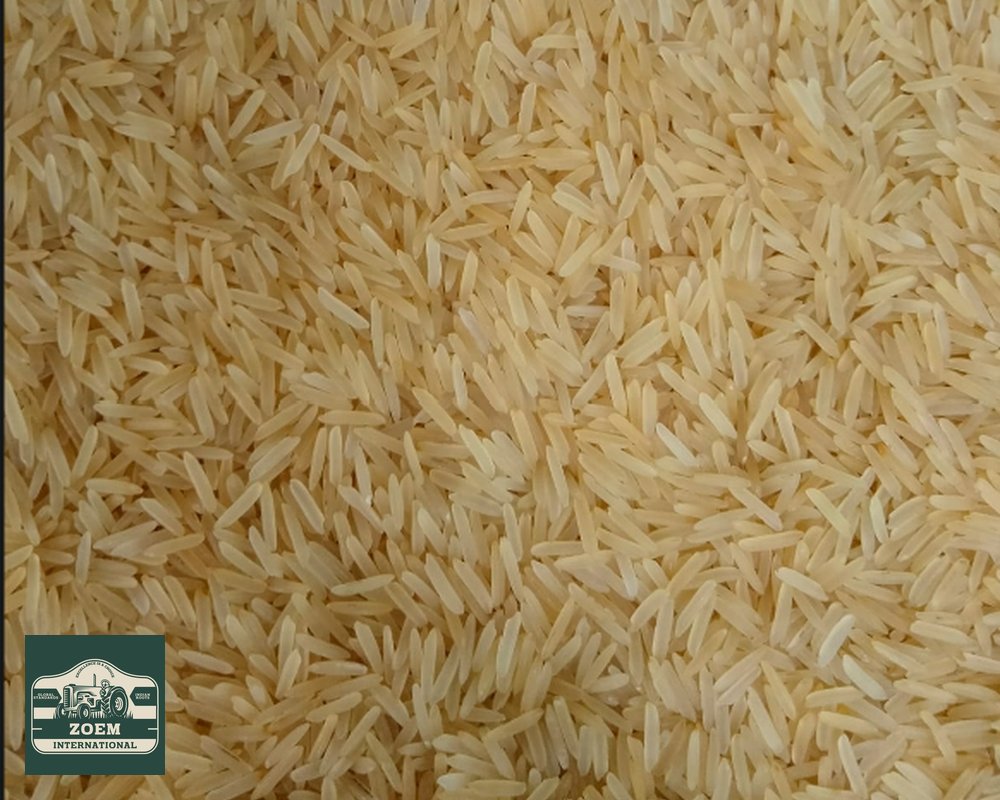
Why Indian sella basmati rice for export
India produces over 70% of the world's basmati rice, and sella (parboiled) basmati is the highest-volume export form. The parboiling process — soaking, steaming, and drying paddy before milling — hardens the grain, reduces breakage, and creates the long, slender, separated grains that GCC, Middle Eastern and African retail buyers demand.
Three primary varieties dominate Indian sella export: 1121 (the longest grain at 8.30+ mm, the global benchmark for premium basmati and the standard reference variety), 1509 (shorter cropping cycle, slightly shorter grain at 8.00 mm, value-grade for high-volume contracts), and 1718 (8.30 mm grain like 1121 but higher yield per acre, popular for private-label retail). Each is available in Golden Sella (steamed, golden colour, longer cook time, lower stickiness), White Sella (par-boiled, cream-white, intermediate texture), and Creamy Sella (closer to raw basmati appearance, premium grade).
ZoeM sources from miller networks across the GI-protected basmati belt — Amritsar (Punjab), Karnal (Haryana), and western UP — with FSSAI-licensed mills handling parboiling, drying, milling, polishing, and grading. Every shipment is NABL-tested for moisture (<13%), broken grains (<1%), foreign matter, white bellies, and the soft-grain count. Container loading 22–25 MT in 25-kg PP bags, jute bags, or custom retail packs from 1–10 kg.